The 20-Year Capital Cycle on Water-Source Heat Pumps
Water-source heat pumps installed in Toronto condo buildings between 2003 and 2015 are approaching the design-service-life capital decision window. Trane Axiom was the dominant install across that era, and ClimateMaster Tranquility 30 is now the near-standard replacement because of refrigerant circuit compatibility, 20 percent energy reduction, and clean chassis footprint migration with per-suite rail modification.
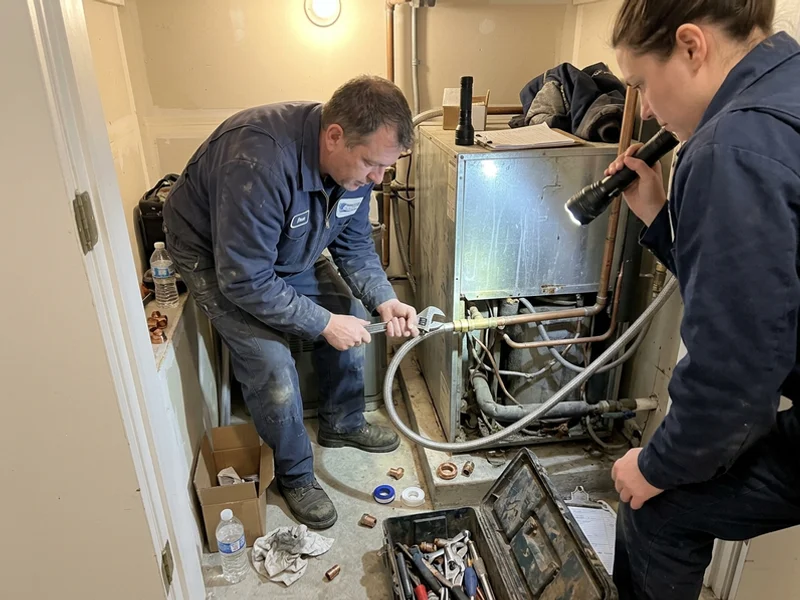
Reactive repair stops making sense around year 18 to 22 on 2000s-2010s stock. Compressor contactors burn out across the entire floor-level population rather than on individual units. Reversing valves fail at increasing rates each shoulder season. Refrigerant leaks appear in the braided stainless hoses connecting the chassis to the building loop. The reserve fund study flags water-source heat pumps as the top capital expense for the next 3 to 5 year window.
At that point a planned replacement program delivers lower total cost of ownership than another 5 years of reactive service callbacks, plus 15 to 20 percent energy reduction that typically funds a meaningful portion of the capital spend over the first 5 years of post-replacement operation.
The Thornhill 220-Unit Program Reference Case
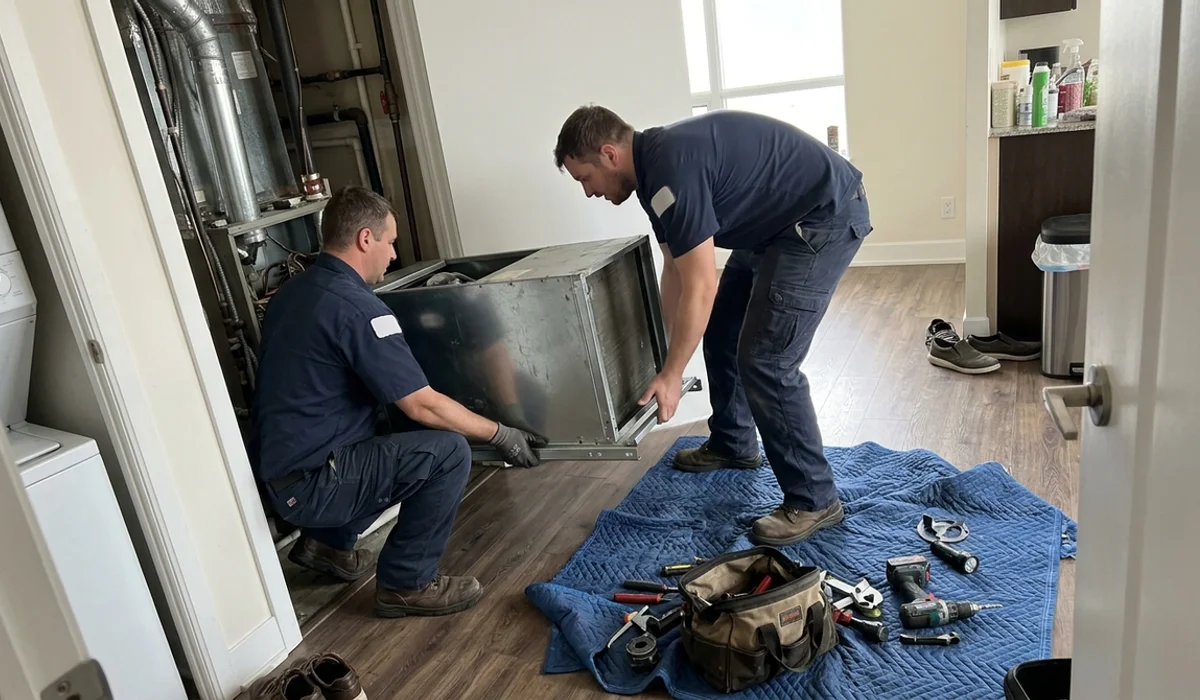
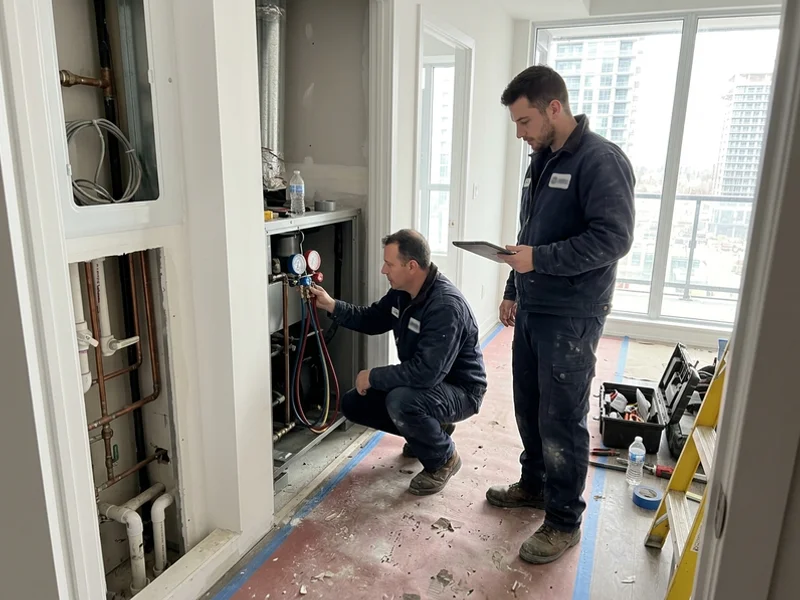
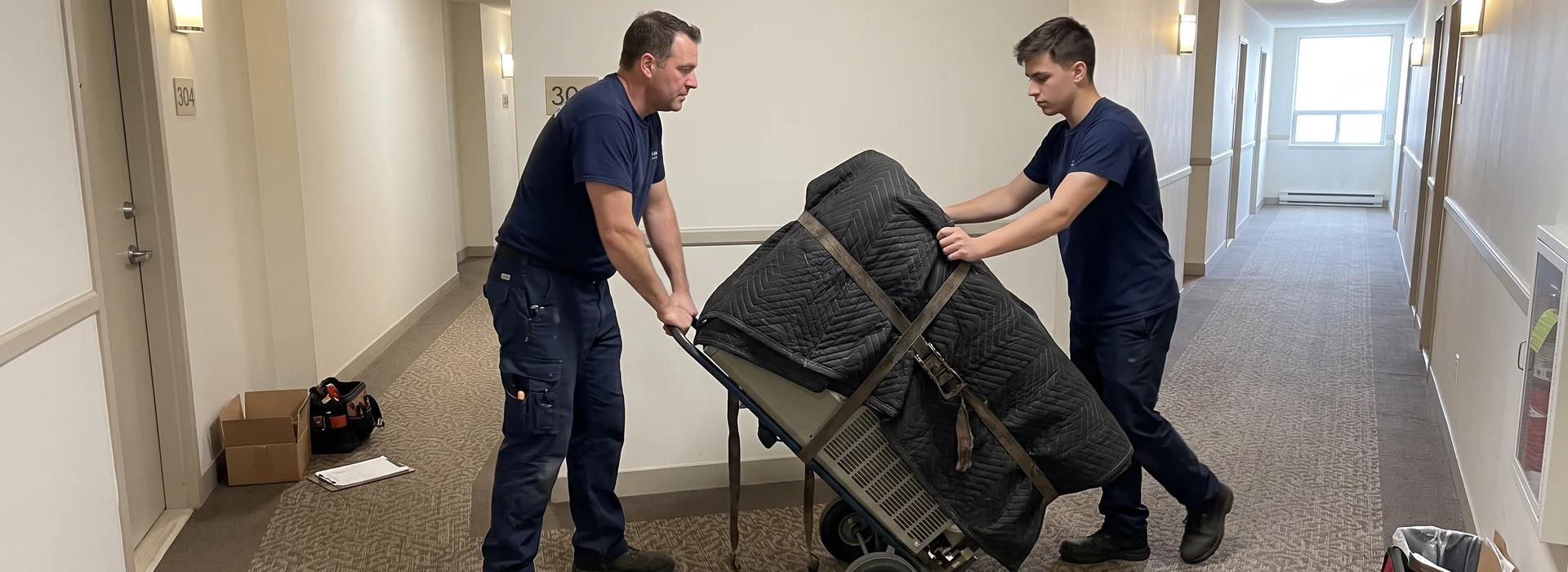
The Thornhill 220-unit luxury tower program we completed earlier this year is the reference case for how we run building-wide water-source heat pump replacement. 1992 original build, 32 years of service on original Trane Axiom chassis. The reserve fund study flagged heat pumps as the top 2026-2028 capital expense.
The program ran:
- 32 consecutive weeks on-site (plus 1 week buffer for punch list)
- 7 units per week cadence (Monday through Thursday install days, Fridays reserved)
- 220 chassis slide-out rail modifications integrated into the install sequence
- 14 resident scheduling accommodations honored for cultural and medical reasons
- 100 percent in-suite retention throughout the 32 weeks
- Zero commissioning failures across the entire program
Post-install energy monitoring showed approximately 18 percent reduction in combined heating and cooling consumption at 90 days. Reserve fund study updated with 20-year replacement baseline from 2026 install dates. Board approved continuation into Phase 2 (common area and mechanical room refresh) at the first post-completion review.
Why Chassis Rail Modification Matters
The 1.5-inch footprint difference between Trane Axiom and ClimateMaster Tranquility 30 is the single biggest execution variable on these programs. On the Thornhill job every closet needed its slide-out rail cut and re-mounted 1.5 inches wider before the new chassis could slide in. 220 rail modifications across 32 weeks.
The per-suite sequence:
- Cardboard template cut per closet before any grinding or cutting
- Slide-out rail removed from original mount points
- Rail re-mounted 1.5 inches wider using matching galvanized angle iron
- Clearance verified with the cardboard template before chassis slide-in
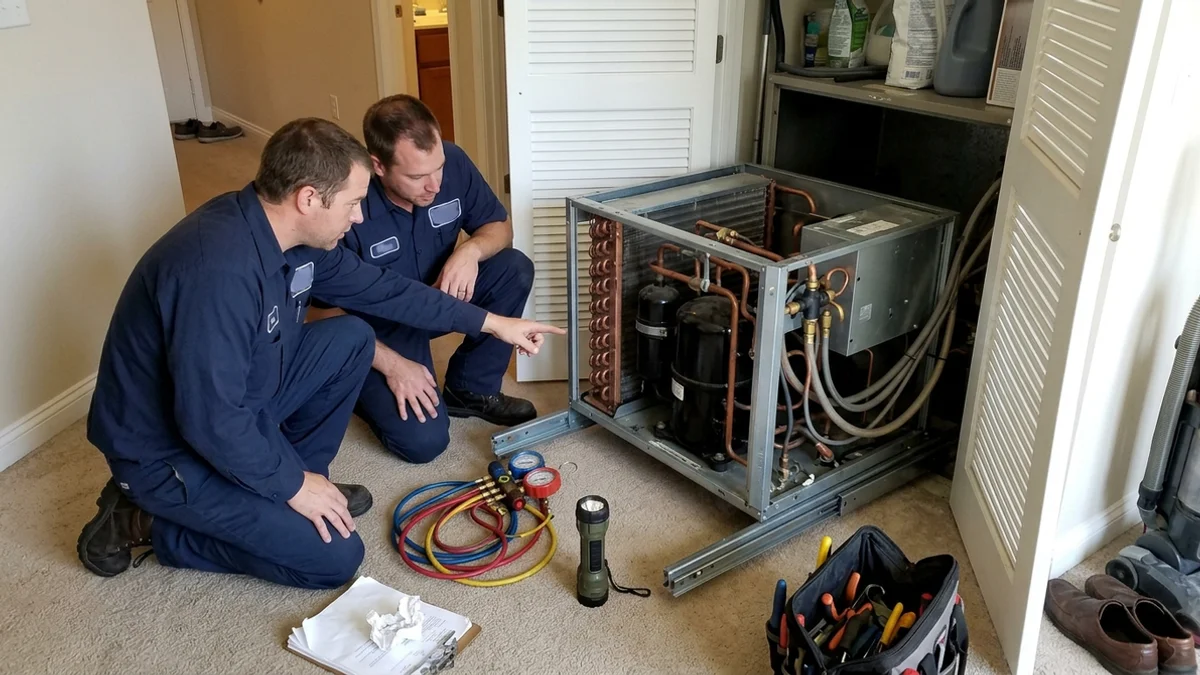
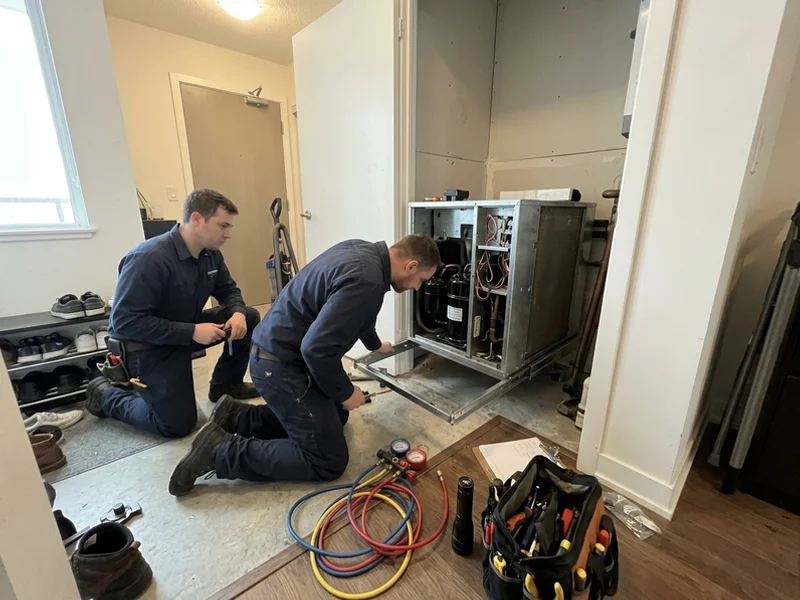
- ClimateMaster chassis slid in on new rails
- Loop connection via new braided stainless hoses
- Commissioning with refrigerant charge verification
Rail modification adds roughly 1 hour to the per-suite install window. We handle template cutting, angle iron supply, and fitting work as integrated scope within the replacement program. No separate contractor needed.
Loop-Side Verification Standard
Every heat pump replacement program includes loop-side verification scope because unit-level replacement without loop condition data invites recurring call-backs. If the primary circulator is wearing, replacing suite-level chassis delivers only marginal performance improvement. If loop chemistry is drifting toward scale accumulation, the new chassis will experience accelerated degradation.
Loop verification includes:
- Primary circulator pump amp draw against nameplate
- Loop pressure differential across the plate-and-frame heat exchanger
- Loop water chemistry sampling for TDS, pH, hardness, chloride, iron
- Water chemistry pre- and post-replacement comparison
- Heat exchanger pressure drop measurement
Where loop conditions require, we quote supplementary scope: primary pump replacement, chemical descaling, or heat exchanger service. Loop verification is included at no extra charge for programs above 20 units. Standalone loop verification is $1,850 fixed.
Reserve Fund Study Integration
Reserve fund studies commissioned under Ontario Condominium Act regulations flag water-source heat pumps as a capital expense when equipment reaches 70 to 80 percent of design service life. The study assigns a remaining service life estimate and a projected replacement cost.
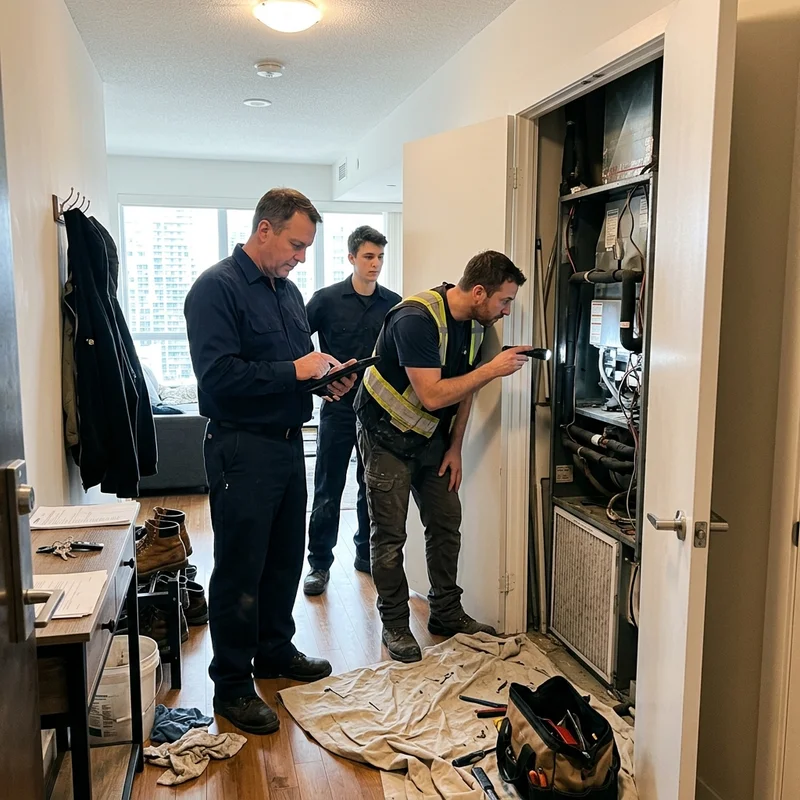
Our walk-through assessment gives your consultant site-specific equipment data: chassis age, model, serial, refrigerant charge, compressor amp draw history, reversing valve stroke status, loop pressure, loop chemistry. The consultant can then build a reserve fund projection with 10 to 20 percent lower uncertainty than the industry-average baseline.
For a 220-unit building, that uncertainty reduction is often worth $100,000 to $300,000 in avoided over-collection or under-collection on the capital reserve. For a 400-unit building, the reduction is $250,000 to $700,000.
Phased program delivery matches the way condo corporations collect capital reserve. A 3-year 30-40-30 split, for example, matches 3 annual reserve fund assessments. No surprise special assessments. No capital shortfall at commissioning time.